
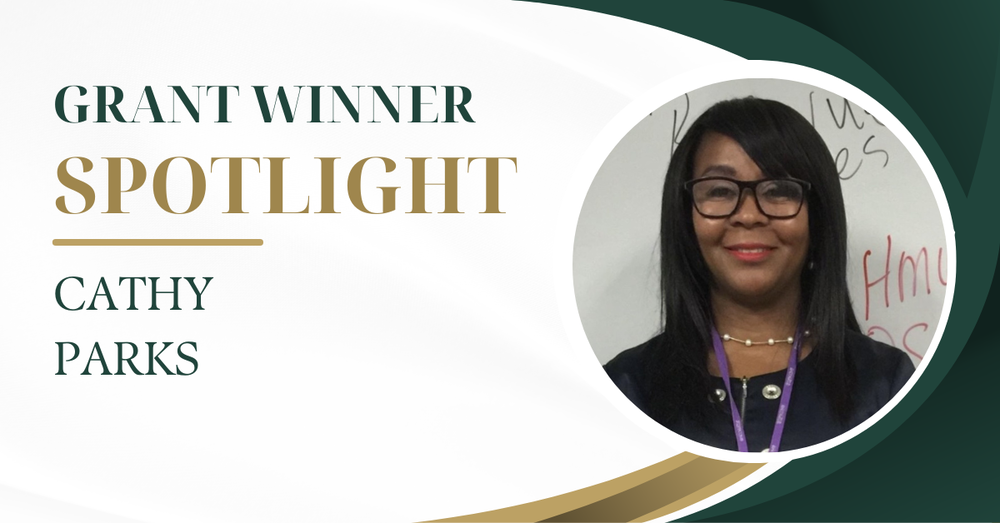
Cathy Parks has dedicated her teaching career to creating transformative learning experiences for her students, and her recent grant award has given her the opportunity to take that commitment even further. Inspired by the desire to introduce her REACH students—students with autism—to new math and science learning tools, Parks saw the grant as a way to expand access to engaging, hands-on educational experiences. Receiving the grant was both personally and professionally meaningful, allowing her to purchase resources and activities that would have been impossible within her regular classroom budget.
The project, titled “Reach and Count the Stars While Exploring Space,” is designed to spark curiosity and build knowledge in math and science through a space-themed lens. Students explore the solar system, learning about stars, planets, and other celestial objects while integrating core concepts like counting, addition, subtraction, time, and measurement. The initiative aligns with Holmquist Elementary’s performance goals, supporting REACH students in meeting their Individualized Education Program objectives while fostering growth in key academic areas.
Parks expects the grant to significantly enrich her students’ learning experiences. By presenting familiar math and science concepts in an imaginative, hands-on context, students can connect classroom learning to interactive exploration. Activities like counting and manipulating space objects, or exploring time and measurement from a space perspective, encourage active engagement while reinforcing critical skills. These experiences are designed not only to educate but to inspire students to see learning as exciting and meaningful.
The goals of the project extend beyond academics. Parks hopes to motivate students through creative and dynamic exploration of math and science concepts. By making learning enjoyable and interactive, she aims to foster both confidence and curiosity. Students are encouraged to participate fully, explore new ideas, and develop a deeper understanding of STEM subjects in ways that feel relevant to their everyday lives.
The initiative reflects Parks’ teaching philosophy, which centers on inspiring students to achieve their learning objectives through engaging and transformative experiences. She believes that education is an investment in human potential, and that students learn best when they are actively involved, having fun, and challenged to do their best. This philosophy drives her approach to creating activities that are accessible, meaningful, and aligned with students’ abilities and interests.
One of the challenges Parks hoped to address with the grant was ensuring that classroom resources and hands-on activities stayed within budget while aligning with math and science objectives. She also aimed to design experiences that would keep students engaged, curious, and motivated. By carefully selecting and implementing resources, the project ensures that students learn while having fun and explore new concepts in a safe, supportive environment.
Students have already responded enthusiastically to the space-themed activities. They delight in seeing stars, planets, and moons projected with colored lights, creating an immersive solar system experience. Dressing up as astronauts and scientists adds a playful, imaginative element that allows students to feel like real explorers, fully engaged in the learning process. These moments of excitement and participation highlight the effectiveness of hands-on, thematic approaches to teaching math and science.
Support from the Alief Independent School District Education Foundation has been transformative for Parks and her classroom. Beyond the financial support, the foundation enables teachers to bring innovative ideas to life, directly impacting student engagement and achievement. It also fosters a culture of community support, giving educators confidence that creative, student-centered projects are valued and encouraged.
For educators considering applying for grants, Parks advises careful planning and thoughtful execution. She recommends creating a clear plan, strategically considering how to introduce the project, and dedicating several days to writing and proofreading the application. Submitting early ensures that the grant proposal is polished and ready for consideration.
Looking ahead, Parks plans to sustain and expand the project by continuing to engage students with transformative, hands-on learning activities. By understanding the diverse learning styles and experiences of REACH students, she tailors lessons to maximize engagement and relevance. Her goal is for students to see math and science as directly connected to their lives, fostering curiosity, critical thinking, and a lasting appreciation for STEM learning that extends well beyond the classroom.